
Why Your Health Demands Relentless Protection
Why is medical care important? Medical care is the foundation of your physical well-being, your ability to pursue life goals, and your capacity to recover from catastrophic harm. It prevents disease, diagnoses conditions early, treats injuries and illness, and provides the documented proof necessary to hold negligent parties accountable when someone else’s actions destroy your health.
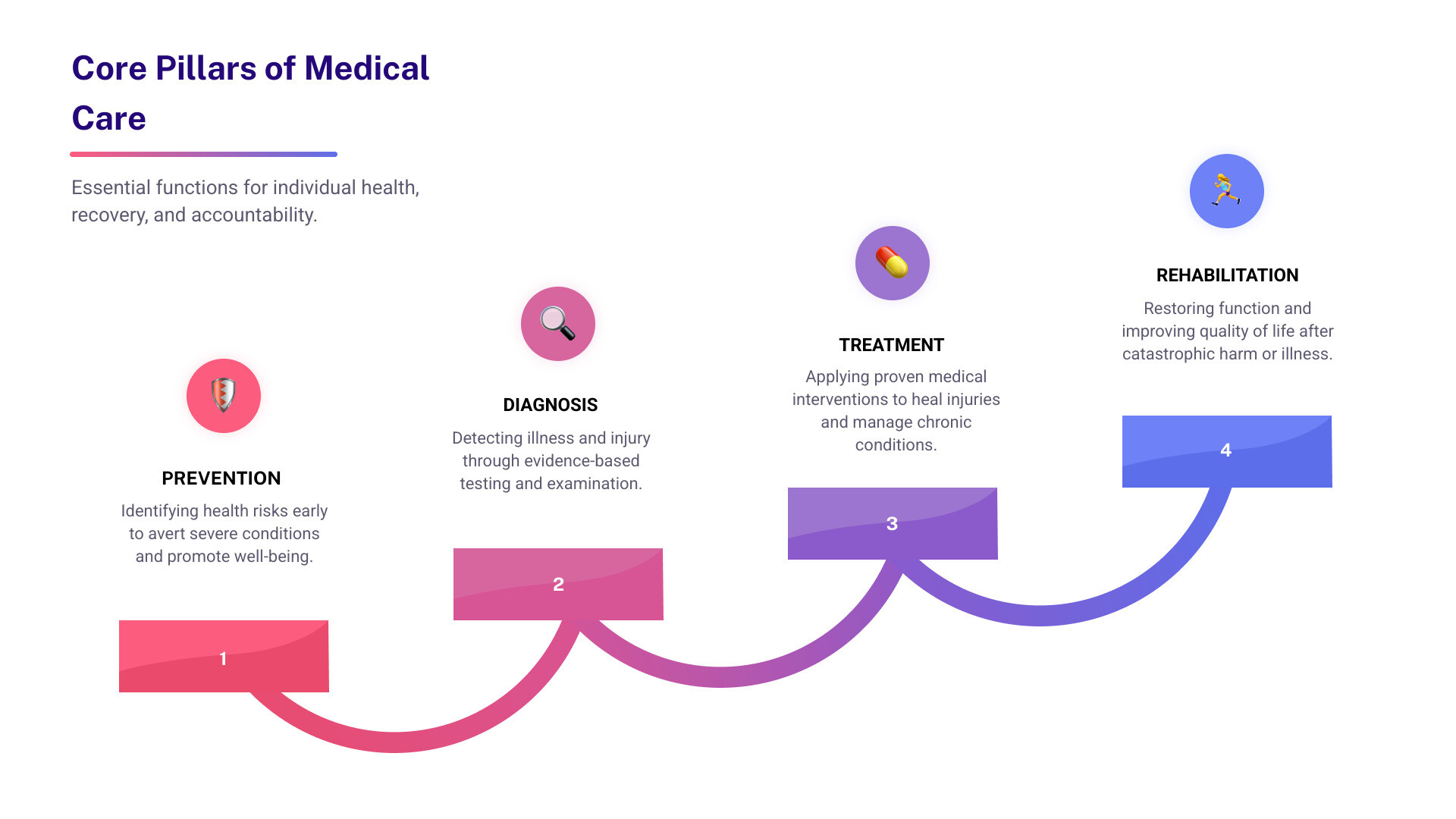
Medical care serves four critical functions:
- Prevention – Identifying health risks before they become life-threatening conditions
- Diagnosis – Detecting illness and injury through evidence-based testing and examination
- Treatment – Healing acute injuries and managing chronic conditions through proven medical interventions
- Rehabilitation – Restoring function and quality of life after catastrophic harm
Health is not a luxury. It is a fundamental human good that determines whether you can work, care for your family, and live without constant pain or suffering. Access to quality medical services reduces premature death, prevents avoidable disability, and provides the information you need to plan your future.
When a corporation’s negligence, a defective product, or another person’s recklessness causes catastrophic injury, medical care takes on a second critical role: documenting the truth. Every emergency room visit, every diagnostic test, every surgery, every prescription creates a record of the harm inflicted upon you. Those records become the foundation of justice.
Between 5.7 and 8.4 million people die each year in low and middle-income countries because of poor quality medical care. In the United States, one in ten hospital patients is harmed by preventable medical errors. The stakes are real. The consequences are permanent.
Yet access alone is not enough. Quality matters. The difference between a health system that saves lives and one that fails patients comes down to whether care is safe, effective, patient-centered, timely, equitable, and efficient. High-quality health systems could prevent 2.5 million deaths from cardiovascular disease, 900,000 deaths from tuberculosis, and 1 million newborn deaths each year.
For those facing catastrophic injury from trucking collisions, workplace negligence, or defective products, medical care is not just about healing. It is about survival, accountability, and the fight to make your life whole again.
The Foundation of Individual Health: The Role of Primary and Preventive Care
Medical care begins with a steadfast commitment to your health. Primary medical care, often your first point of contact with the healthcare system, focuses on day-to-day health needs. It is the cornerstone of proactive health management, distinct from specialist care which addresses specific conditions or diseases. Primary care providers, such as family doctors and general practitioners, are equipped to handle a wide range of health concerns, guiding you through prevention, diagnosis, and treatment.
This foundational care is critical for disease prevention, early detection of abnormalities, and the ongoing management of chronic conditions. It is the steady hand that guides individuals toward longer, healthier lives. Unfortunately, a significant number of people still neglect this crucial step; approximately 1 in 3 individuals in the U.S. do not receive the preventive care they need. This oversight can lead to missed opportunities for early intervention and, potentially, catastrophic health outcomes.

Why is medical care important for managing your long-term health?
Prioritizing medical care is a relentless act of self-preservation. It is about maintaining good health, not just reacting to illness. Regular annual check-ups allow your primary care physician to establish a baseline of your health, track changes over time, and identify potential issues before they escalate. This proactive approach is a powerful defense against the silent creep of disease.
Your physician acts as a resourceful guide, offering recommendations and tips for health concerns that extend beyond mere diagnoses and treatments. They help you steer complex health information, manage conditions that do not immediately require specialist intervention, and empower you with knowledge to make informed lifestyle choices. This consistent engagement manages conditions before they become catastrophic, preserving your well-being and your future.
How Medical Care Contributes to Disease Prevention and Longevity
The impact of medical care on disease prevention and longevity is undeniable. Through regular screenings, risk factor identification, and immunizations, healthcare providers can significantly reduce your vulnerability to various illnesses. For instance, seasonal immunizations protect against common ailments like the flu, preventing widespread outbreaks and severe individual suffering.
Medical professionals also offer evidence-based guidance on lifestyle choices—from diet and exercise to stress management—that are vital for long-term health. These interventions can add years to your life and improve its quality. Statistics underscore this reality: high-quality health systems possess the power to prevent millions of deaths each year, including 2.5 million from cardiovascular disease and 1 million newborn deaths. This relentless pursuit of health is a testament to the profound importance of accessible and effective medical care. By focusing on prevention, medical care reduces health risks and improves early detection for diseases, ultimately increasing overall quality of life.
Defining Excellence: What Constitutes “Quality” Medical Care?
The importance of medical care extends beyond mere availability; its quality is paramount. When medical care falters, the consequences are severe. Poor quality care, particularly in low- and middle-income countries, is responsible for an estimated 5.7 to 8.4 million deaths annually. This represents a staggering 15% of all deaths in these regions, underscoring the critical need for systems that deliver care with integrity and precision. Inadequate quality also imposes a crippling economic burden, costing billions in lost productivity.
Quality care is not an abstract ideal; it is a measurable standard. According to the Agency for Healthcare Research and Quality, quality care is defined as health care that is safe, effective, patient-centered, timely, efficient, and equitable. The World Health Organization further emphasizes the concept of integration, meaning care and services are coordinated across providers throughout prevention, treatment, and maintenance. This holistic approach ensures that every aspect of a patient’s journey is cohesive and purposeful.

The Core Components of a High-Quality Health System
A high-quality health system is built upon a foundation of critical components. It must be safe, ensuring that patients are protected from preventable harm, such as medical errors or healthcare-associated infections. It must be effective, delivering evidence-based treatments that yield desired health outcomes. Care must be patient-centered, respecting individual preferences, needs, and values, and timely, reducing harmful delays in diagnosis and treatment.
Efficiency in a healthcare system means maximizing resources and avoiding waste, while equity ensures that care does not vary in quality based on demographics, socio-economic status, or geographic location. Health information technology, including integrated electronic health records, plays a pivotal role in achieving these standards by enabling seamless data exchange and enhancing coordination. Furthermore, quality care is driven by evidence-based research and best practices, often formalized through national guidelines programs that ensure consistent, high-standard treatment across the board. Physician-led models of care, which prioritize clinical excellence and patient outcomes over volume, are often key to implementing these rigorous standards.
The “Paracurative” Functions: Care Beyond Curing
The functions of medical care extend beyond direct curing or prevention. These “paracurative” functions address the human experience of illness and injury, offering vital support even when a full recovery is not possible. This includes the assessment and certification of health status, providing patients with a clear understanding of their condition and its implications. Prognostication, the act of predicting the likely course of a disease or injury, prepares patients and their families for future challenges.
Crucially, the caring function provides comfort, compassion, and emotional support. This aspect of medical care offers profound satisfaction to patients, alleviating suffering and improving their quality of life, even as health status may decline. In situations of catastrophic injury, where the focus shifts from cure to management and adaptation, these paracurative functions become indispensable. They acknowledge the full spectrum of human need, ensuring that patients receive holistic support that respects their dignity and humanity.
Why is medical care important? A Societal and Ethical Obligation
The importance of medical care transcends individual well-being to become a fundamental societal and ethical obligation. Health is a human right, as declared by the WHO constitution of 1948, and society bears a moral responsibility to ensure access to an adequate level of care for all its members, regardless of their ability to pay. This principle underpins the concept of Primary Health Care (PHC), which advocates for a whole-of-society approach to health, focusing on people’s needs from promotion and prevention to treatment and palliative care.
The ultimate goal of this collective endeavor is Universal Health Coverage (UHC), ensuring that all people obtain the health services they need without suffering financial hardship. UHC is not merely a healthcare objective; it is a critical component of sustainable development, poverty reduction, and social equity. It recognizes that healthy populations are more productive, children learn better in school, and communities thrive.
The Global Impact of Investing in Primary Health Care
Investing in Primary Health Care (PHC) yields profound global benefits, extending far beyond clinical outcomes. Scaling up PHC interventions, especially in low and middle-income countries, could save an estimated 60 million lives and increase average life expectancy by 3.7 years by 2030. This monumental impact is a cornerstone of achieving the Sustainable Development Goals (SDGs), with PHC interventions contributing to an estimated 75% of projected health gains.
Beyond saving lives, PHC builds resilient health systems capable of withstanding crises and proactively detecting epidemics. It prevents financial hardship, a critical concern given that over 1.6 billion people worldwide were at risk of being pushed into poverty due to out-of-pocket health spending in 2022. By prioritizing PHC, nations invest in the health of their citizens, fostering economic stability and social progress.
Why is medical care important for achieving health equity?
The pursuit of health equity is a moral imperative, and medical care is its primary instrument. Health equity means that everyone has a fair and just opportunity to be as healthy as possible, regardless of their social, economic, or environmental circumstances. This requires addressing the social determinants of health—factors like income, education, housing, and access to nutritious food—that profoundly influence health outcomes.
Culturally responsive care, which considers language preferences, cultural beliefs, and individual values, is essential for reducing health disparities and achieving equitable outcomes. It ensures that care is patient-centered and respects the diverse backgrounds of individuals. By protecting vulnerable populations and striving for consistent quality of care across all demographics, medical care fulfills its ethical promise to serve everyone. The relentless fight for justice for those harmed by negligence is also a fight for health equity, ensuring that no one is left behind because of their circumstances.
Medical Care as the Cornerstone of Justice After a Catastrophic Injury
For individuals in Georgia who have suffered catastrophic injuries due to another’s negligence, medical care takes on an additional, profound significance. It is not only the path to physical recovery but also the cornerstone of justice. Every medical intervention, every diagnosis, every treatment record carefully documents the full extent of the harm inflicted. This detailed medical history is the undeniable evidence needed to prove negligence and establish causation between an incident and the resulting injury.
Consider a trucking collision on a Georgia highway, a defective product sold in Atlanta, or corporate negligence in Sandy Springs. The medical records from these incidents become invaluable in quantifying damages, demonstrating the financial and personal toll on the victim. Without these records, proving your case and securing the compensation you deserve becomes an impossible task. Understanding what is personal injury law is the first step in translating this medical evidence into legal accountability.
How Consistent Medical Treatment Defeats Defense Tactics
In personal injury cases, defense attorneys and insurance companies often employ aggressive tactics to minimize their liability. A common strategy involves claiming that a victim’s injuries were pre-existing or unrelated to the incident. Consistent medical treatment, carefully documented, is the most powerful weapon against such claims. It demonstrates a clear timeline of injury, treatment, and ongoing suffering directly attributable to the catastrophic event.
Following a doctor’s orders is paramount. Any gaps in treatment or failure to adhere to medical advice can be exploited by the defense to argue that the victim’s injuries are not as severe as claimed, or that they failed to mitigate their damages. Furthermore, consistent medical care establishes the necessity of treatment and builds a robust foundation for predicting and proving the need for future medical care. Medical experts, testifying based on these records, become indispensable in the personal injury court process, articulating the extent of the harm and the long-term prognosis.
Translating Medical Records into Legal Accountability
The medical records generated from your care are more than just clinical notes; they are the narrative of your suffering and the blueprint for your compensation. Medical bills serve as concrete evidence of financial loss, documenting the immediate and ongoing costs of treatment. Physician testimony provides expert insight into the nature of your injuries, their impact on your daily life, and your long-term needs.
Translating this medical evidence into legal accountability requires skill and tenacity. It involves proving pain and suffering, calculating lost wages, and projecting the costs of future medical care, rehabilitation, and assistive devices. Understanding how compensation is calculated ensures that every aspect of your loss is accounted for, from physical therapy to emotional distress. This meticulous process forms the foundation for a strong settlement negotiation or, if necessary, a powerful trial verdict, ensuring that those responsible are held accountable for the harm they have caused.
Conclusion
The undeniable truth is that medical care is a critical pillar supporting individual health, societal progress, and the relentless pursuit of legal justice. From the routine prevention that safeguards your well-being in Alpharetta or Marietta, to the complex treatments that fight for recovery after a catastrophic event in Atlanta or Roswell, medical care is essential. Prioritizing your health is not merely a personal choice; it is the first step toward a life of vitality and, when tragedy strikes, the foundation for recovery and accountability.
When negligence shatters lives, causing catastrophic harm that leaves permanent scars, securing justice demands a firm that will relentlessly pursue the truth. Cheeley Law Group stands as that relentless champion, fighting for victims throughout Georgia. We understand that your medical records are more than just paper; they are the story of your injury and the evidence for your fight. For a comprehensive evaluation of your case, contact our firm to understand your legal rights. Personal Injury. Past results do not guarantee future outcomes.