
When a Life is Cut Short by Negligence
A wrongful death claim Georgia families pursue begins when a life is taken by someone’s negligence, recklessness, or intentional act. State law allows specific family members to hold the wrongdoer accountable, but only if they understand who can file, what can be recovered, and when the law says time runs out.
Key Facts About Wrongful Death Claims in Georgia:
- Who can file: Surviving spouse first, then children, then parents, then estate representative
- Time limit: Generally two years from date of death (exceptions exist)
- What you can recover: Full value of the deceased’s life, including lost wages, benefits, and companionship
- Spouse’s minimum share: At least one-third of any recovery, regardless of number of children
- Estate claims: Separate action for medical bills, funeral costs, and the deceased’s pre-death pain and suffering
When negligence destroys a family, Georgia’s Wrongful Death Act ensures accountability matters. This is not about closure; it is about forcing corporations, insurers, and negligent parties to face what they have done. It is about ensuring a preventable death is not dismissed as “just an accident.”
Understanding Georgia’s laws—who has legal standing and what damages are recoverable—is not a small detail. It determines whether your family can pursue justice at all.
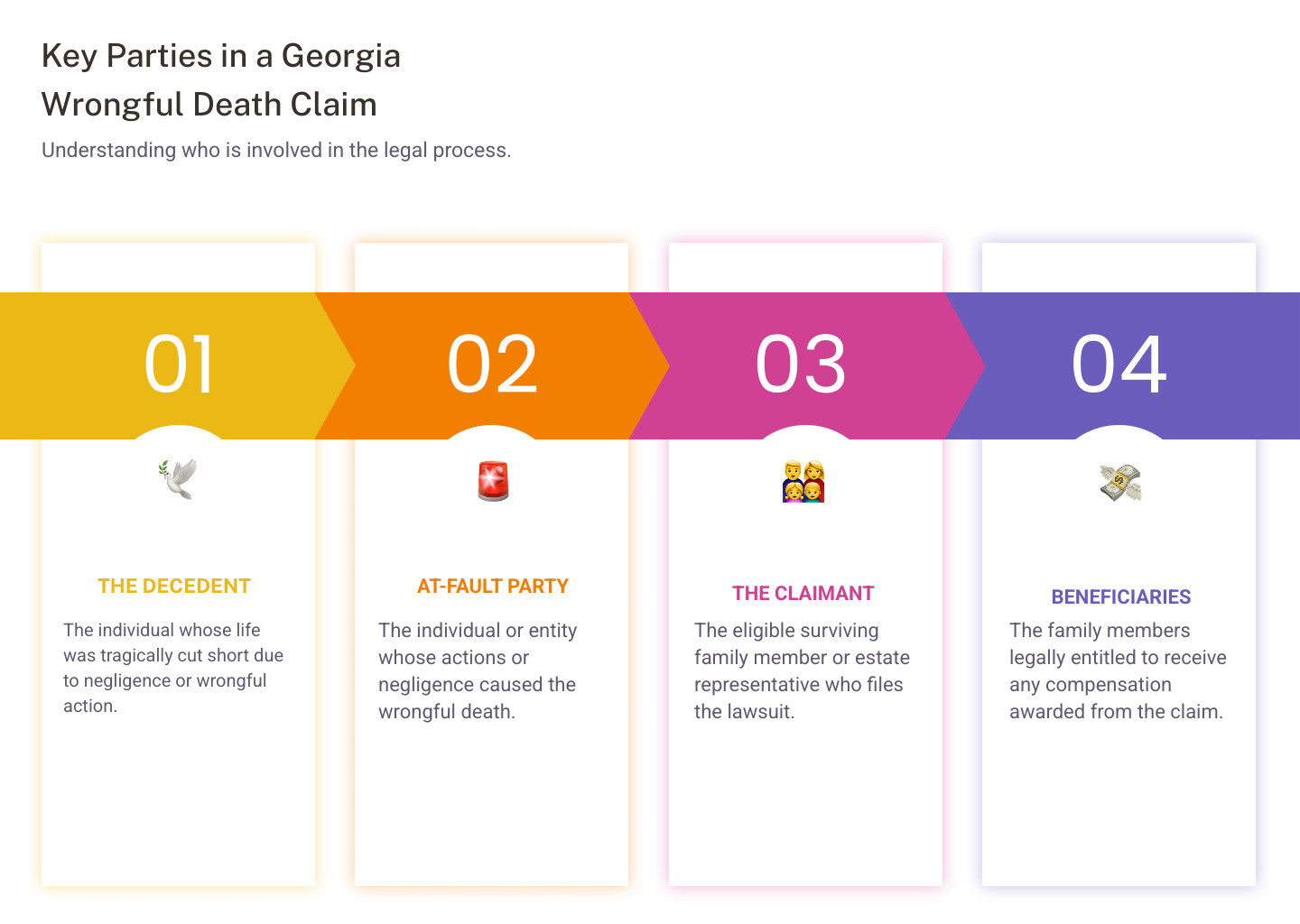
Know your Wrongful death claim Georgia terms:
Navigating a Wrongful Death Claim in Georgia: Key Legal Answers
When a tragedy strikes, the legal system can feel overwhelming. Understanding the basics of a wrongful death claim Georgia is a first step toward protecting your family’s future.
What Constitutes a Wrongful Death in Georgia?
Under Georgia law, a wrongful death is caused by another person or entity’s negligent, reckless, criminal, or intentional conduct. It can also involve defective products. These are preventable deaths that happened because someone failed to use reasonable care.
Common examples include fatal crashes caused by impaired driving, serious medical errors, and unsafe workplace conditions. To prove liability, you generally must show:
- Duty of Care: The at-fault party had a legal obligation to act responsibly.
- Breach of Duty: They failed to uphold that duty through their actions or inaction.
- Causation: This breach directly caused the death.
- Damages: The death resulted in measurable losses for the surviving family.
A wrongful death claim is, in essence, a personal injury claim where the victim cannot seek justice themselves. What is Personal Injury Law? provides further context on these foundational legal principles.
Who Can File a Claim and When?

Georgia law sets a strict order for who can file a wrongful death claim. The right to file belongs first to the surviving spouse. If there are children, the spouse represents their interests and must receive at least one third of the recovery. If there is no spouse, the children may file. If there are no children, the parents may file. If none of those apply, the estate’s representative may file for the benefit of the next of kin.
Statute of Limitations: Time is a critical factor. Generally, a claim must be filed within two years from the date of death. Missing this deadline can permanently bar a family from seeking compensation. However, key exceptions exist:
- Criminal Cases: The statute may be paused (tolled) for up to six years if the death resulted from a crime, allowing the civil case to proceed after the criminal case concludes.
- Probate Exceptions: If the deceased’s estate is not probated, the deadline can be extended for up to five years.
- Government Entities: Claims against government bodies have much shorter deadlines, sometimes only six months, and require specific notice procedures.
Immediate legal consultation is vital to protect your rights. For more information, see Georgia Wrongful Death Claims.
Understanding Damages in a Georgia Wrongful Death Case
A successful wrongful death claim Georgia recovers damages for the “full value of the life of the decedent.” This legal standard is a comprehensive measure of both tangible and intangible losses.
Economic Damages are quantifiable financial losses, including:
- Lost Wages and Benefits: The income and benefits (health insurance, retirement) the deceased would have earned over their lifetime.
- Lost Services: The monetary value of household tasks, childcare, and other contributions.
Non-Economic Damages compensate for intangible losses, such as:
- Loss of Companionship: The absence of love, affection, and support.
- Loss of Care and Guidance: The loss of mentorship and counsel.
- Loss of Enjoyment of Life: The lost fulfillment the deceased would have experienced.
The “full value of the life” is measured from the deceased’s perspective—what their life was worth to them. This approach acknowledges the profound depth of the loss. How Compensation Calculated further explains this complex assessment.
Damage Distribution: Any recovery is divided among the beneficiaries according to statute. If a spouse and children survive, they share the recovery, but the spouse receives no less than one-third.
Wrongful Death Claim vs. Survival Action: What’s the Difference?
In Georgia, a fatal incident can lead to two distinct legal actions: a wrongful death claim and a survival action (or estate claim). They address different losses and benefit different parties.

A Wrongful Death Claim is brought by family members to compensate them for the loss of their loved one. Damages are for the “full value of the life,” as described above.
A Survival Action is brought by the deceased’s estate to recover losses the deceased suffered before death. These include medical bills, funeral costs, and the conscious pain and suffering the deceased endured.
Combining both claims is essential for full compensation. See Georgia Wrongful Death Claims for more details.
| Feature | Wrongful Death Claim | Survival Action (Estate Claim) |
|---|---|---|
| Purpose | Compensate family for their losses due to the death | Compensate the deceased’s estate for losses they suffered before death |
| Who Files | Surviving spouse, children, parents, or estate rep. | Estate’s personal representative |
| Types of Damages | Full value of life (economic & non-economic) | Medical expenses, funeral costs, deceased’s pain & suffering |
| Beneficiaries | Specific statutory beneficiaries (family) | Deceased’s estate (distributed via will/intestacy) |
| Subject to Debts | Generally not subject to deceased’s debts | Generally is subject to deceased’s debts |
What Steps Should a Family Take When Considering a Wrongful Death Claim in Georgia?
The aftermath of a wrongful death is a time of profound grief. However, taking certain steps quickly is critical to preserving your family’s legal rights.
- Preserve Evidence: As soon as possible, document everything. This includes photos of the scene, contact information for witnesses, police reports, and the vehicle involved (if applicable). Evidence can disappear quickly.
- Document Losses: Collect all medical bills, funeral expenses, and records of the deceased’s income. While difficult, noting the impact of the loss of companionship and guidance is also important.
- Avoid Statements to Insurers: Do not give recorded statements or sign documents from the at-fault party’s insurance company without legal counsel. Their goal is to minimize your claim.
- Consult an Attorney: This is the most critical step. A qualified Georgia wrongful death attorney will protect your rights, manage deadlines, and launch an investigation to uncover the truth. The Lawsuit Settlement Process begins with this consultation.
Why Hiring a Lawyer is a Critical Step for a Wrongful Death Claim in Georgia
Navigating a wrongful death claim Georgia means facing powerful corporations and insurance companies whose goal is to deny accountability. An experienced legal team is not just beneficial—it is essential.
An attorney handles the complex litigation, from proving negligence to navigating courtroom procedures. At Cheeley Law Group, we build every case for trial, a strategy that signals to defendants we are prepared to fight for a verdict. This aggressive preparation is key to uncovering the truth through expert investigation and forcing favorable outcomes.
Determining the “full value of the life” requires a sophisticated analysis of lost earnings and intangible losses, often with testimony from economists and other experts. A lawyer ensures every aspect of your loss is quantified and powerfully presented.
Most importantly, a dedicated attorney provides protection and guidance, handling the legal burdens so your family can focus on healing. Firms like Cheeley Law Group work on a Contingency Fee Explained, meaning you pay no fees unless we win your case. This ensures justice is accessible to all, a principle as vital in wrongful death cases as it is for a The Role of a Car Accident Lawyer.
Securing Justice After a Devastating Loss
The loss of a loved one to negligence leaves an unfillable void. While no amount of money can replace a life, a successful wrongful death claim Georgia delivers accountability. It forces negligent drivers, careless corporations, and indifferent insurers to face the consequences of their actions.
At Cheeley Law Group, we know that families in Alpharetta, Atlanta, Johns Creek, Roswell, Sandy Springs, Duluth, and Marietta are seeking a relentless champion. We uncover the truth, expose negligence, and fight for justice with unwavering determination. Our “trial first” strategy, backed by a history of record-setting verdicts, means we are prepared to take on the most powerful adversaries to secure the accountability your family deserves. Past results do not guarantee future outcomes.
If your family has suffered a tragic loss, do not face the legal battle alone. Let us fight for you.
Schedule your confidential consultation to discuss your personal injury case and begin the path toward justice.