
When Negligence Destroys a Family
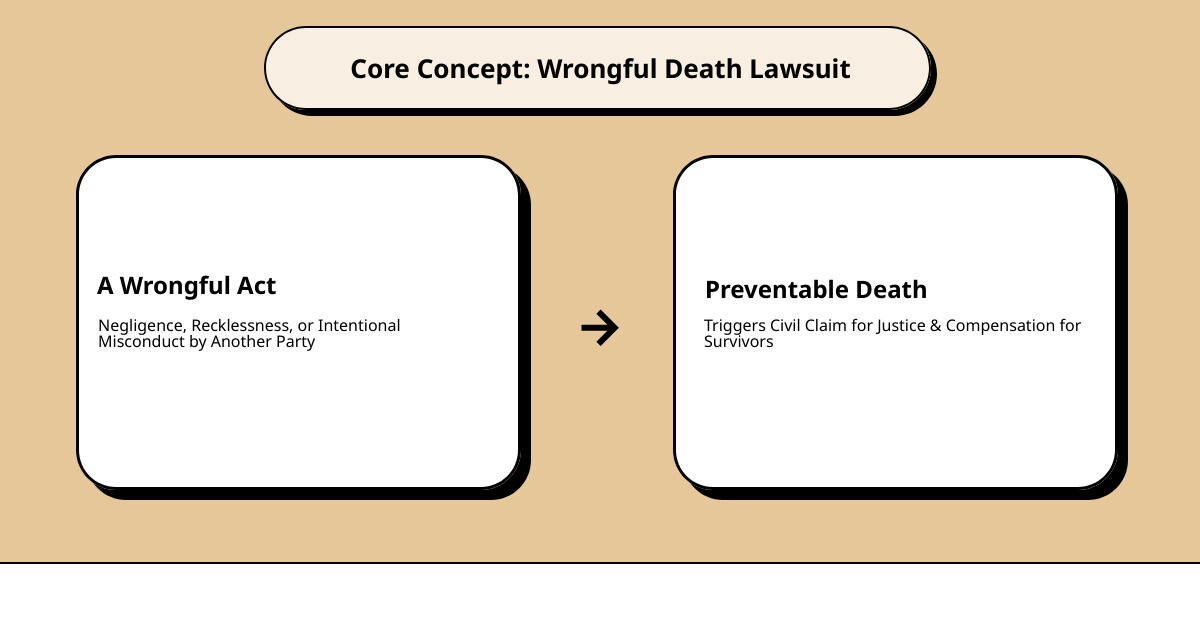
A wrongful death lawsuit is a civil legal action brought by surviving family members when a person dies due to another party’s negligence, recklessness, or intentional misconduct. It seeks to hold the responsible party accountable and secure financial compensation for the immeasurable loss.
Key Facts About Wrongful Death Claims:
- What it is: A civil case (not criminal) seeking damages when someone’s wrongful act causes a death
- Who can file: In Georgia, the surviving spouse, children, or estate representative
- Time limit: Two years from the date of death in Georgia
- Purpose: To recover the “full value of the life” lost and hold negligent parties accountable
- Common causes: Vehicle collisions, medical malpractice, defective products, workplace accidents, and premises liability
According to preliminary statistics from the Ontario Ministry of Transportation, almost 500 Ontarians died as the result of 439 fatal traffic collisions during 2016. In Georgia and across the nation, preventable deaths occur every day because someone chose convenience over safety, profit over protocol, or speed over caution.
When a loved one dies because of someone else’s negligence, no amount of money can restore what was taken. But the law recognizes that survivors deserve justice. A wrongful death claim is not about revenge. It is about accountability.
It forces the responsible party to answer for the harm they caused. It compensates the family for lost income, companionship, and guidance. And it honors the memory of the person who should still be here.
The legal process is complex. The opposition—often corporations, insurance companies, or well-funded defendants—will fight to minimize their liability. Survivors need representation that matches their resolve.
This guide explains what a wrongful death lawsuit is, how it works in Georgia, and what families must prove to secure justice.
The Foundation of a Wrongful Death Case in Georgia
When a life is tragically cut short by another’s wrongful act, the law provides a pathway for justice through a wrongful death lawsuit. This civil action is built upon a clear set of legal principles, designed to determine fault and ensure accountability. It is a meticulous process, akin to constructing a complex engineering blueprint, where each element must be precisely proven.

To succeed in a wrongful death claim in Georgia, the plaintiff must establish four essential elements:
- Duty of Care: The defendant owed a legal duty to the deceased. This duty requires individuals and entities to act with a certain level of care to prevent harm to others. For instance, a driver has a duty to operate their vehicle safely, and a property owner has a duty to maintain safe premises.
- Breach of Duty: The defendant failed to uphold that duty of care. This means their actions or inactions fell below the accepted standard of care that a reasonable person or entity would have exercised under similar circumstances. This failure constitutes negligence.
- Causation: The defendant’s breach of duty directly caused the death of the loved one. There must be a clear and direct link between the negligent act and the fatality. Without this connection, even a clear breach of duty will not support a wrongful death claim.
- Damages: The death resulted in measurable losses to the surviving family members. These damages can be both economic and non-economic, representing the full value of the life lost.
Proving negligence is central to establishing a wrongful death claim. It involves demonstrating that the defendant violated the standard of care, and that this violation was the direct cause of the death. In Georgia, the legal standard of proof for civil cases is the “preponderance of the evidence.” This means the evidence must show it is more likely than not that the defendant’s actions caused the death. While some jurisdictions refer to this as “on the balance of probabilities,” the core concept remains that the evidence must tip the scales in favor of the plaintiff.
For more information on the broader context of legal claims involving injuries, please see our page about More info about Personal Injury. The concept of “proof on the balance of probabilities” is a fundamental principle in civil litigation, ensuring that decisions are based on the most convincing evidence presented. You can learn more about this standard by reading this resource on Proof on the balance of probabilities: what this means in practice.
Common Causes and Critical Distinctions in a Wrongful Death Lawsuit
A wrongful death lawsuit can arise from a multitude of tragic circumstances where another party’s negligence or intentional act leads to a fatality. These cases often involve catastrophic accidents that leave families shattered and seeking answers. Understanding the common causes and key legal distinctions is crucial for anyone pursuing justice.

Catastrophic Accidents
Many wrongful death claims stem from devastating accidents where a party’s carelessness has fatal consequences. These include:
- Trucking Collisions: Large commercial trucks can cause immense damage. Negligence on the part of the truck driver, trucking company, or even maintenance providers can lead to fatal outcomes.
- Auto Accidents: Distracted driving, impaired driving, speeding, or other reckless behaviors by motorists are frequent causes of fatal car accidents on Georgia roads.
- Workplace Incidents: Unsafe working conditions, lack of proper training, or employer negligence can result in fatal accidents. This is particularly true in hazardous industries like construction.
- Defective Products: When a product fails due to a design flaw, manufacturing defect, or inadequate warnings, it can cause death. Manufacturers and distributors can be held accountable for such tragedies. To understand more about liability in such cases, consider our insights on More info about Suing Manufacturer vs. Driver.
- Premises Liability: Property owners have a responsibility to maintain a safe environment for visitors. Fatalities can occur due to hazards like negligent security, inadequate lighting, or dangerous structural conditions.
- Medical Malpractice: When healthcare professionals deviate from the accepted standard of care, it can lead to fatal medical errors. This includes misdiagnosis, surgical errors, or medication mistakes.
Civil vs. Criminal Proceedings
It is vital to understand that a wrongful death lawsuit is a civil legal action, distinct from any potential criminal charges that may arise from the same incident. While both address a death, their purposes, standards of proof, and outcomes differ significantly.
| Feature | Civil Wrongful Death Claim | Criminal Homicide Case |
|---|---|---|
| Purpose | Compensation for survivors’ losses | Punishment of the offender (e.g., jail, fines) |
| Burden of Proof | Preponderance of the Evidence (more likely than not) | Beyond a Reasonable Doubt (almost certainty) |
| Parties | Surviving family members vs. negligent individual/entity | State vs. alleged offender |
| Outcome | Monetary damages | Incarceration, fines, probation, or acquittal |
A defendant may be acquitted in a criminal trial but still found liable in a civil wrongful death action. A notable historical example is the O.J. Simpson case, where he was acquitted of criminal charges but later found liable in a civil wrongful death lawsuit, resulting in substantial punitive damages. This demonstrates the differing standards of proof and objectives of each legal system. Further details on this landmark case can be found here: Jury Decides Simpson Must Pay $25 Million in Punitive Award.
Who Can File and What Is the Deadline in Georgia?
When a life is taken due to another’s negligence, the law carefully defines who has the standing to pursue a wrongful death lawsuit. In Georgia, this is not an open invitation; there is a specific hierarchy of claimants established to ensure that the most directly affected family members can seek justice. Furthermore, a strict deadline governs when such a claim can be filed, emphasizing the urgency of legal action.
Georgia’s Hierarchy of Claimants
In Georgia, the right to file a wrongful death lawsuit is granted to specific individuals in a particular order:
- Surviving Spouse: The spouse of the deceased is the first in line to bring a wrongful death claim. If there are also minor children, the spouse represents both their interests and those of the children. Georgia law dictates that the spouse must receive at least one-third of any settlement or award, with the remainder divided among the children.
- Surviving Children: If there is no surviving spouse, the deceased’s children have the right to file the lawsuit. They would then share any recovered damages equally.
- Personal Representative of the Estate: If there is no surviving spouse and no surviving children, the personal representative (executor or administrator) of the deceased’s estate can initiate the lawsuit. This action is brought on behalf of the deceased’s next of kin who are dependent on the deceased.
This hierarchy ensures that the individuals most directly impacted by the loss are empowered to seek recourse. It reflects the deep personal and financial ties that often exist within immediate family units.
The Statute of Limitations
Time is a critical factor in a wrongful death lawsuit. Georgia law imposes a strict deadline, known as the statute of limitations, for filing these claims.
- Georgia’s Two-Year Deadline: Generally, a wrongful death lawsuit in Georgia must be filed within two years from the date of the loved one’s death. This period is not flexible; it is a hard deadline.
- The Findy Rule: While the two-year rule is standard, certain limited exceptions might apply. For instance, if the cause of death was not immediately apparent, the “findy rule” might extend the deadline. However, such exceptions are rare and complex, requiring careful legal analysis.
- Consequences of Missing the Deadline: Failing to file a wrongful death lawsuit within the prescribed two-year window almost always results in a permanent bar to recovery. Once the statute of limitations expires, the legal right to bring a claim is lost forever, regardless of the merits of the case.
Given the emotional toll of losing a loved one and the intricate legal requirements, it is imperative to contact an experienced wrongful death attorney as soon as possible. Delay can jeopardize a family’s ability to seek the justice and compensation they deserve.
The Full Value of a Life: Calculating Damages in a Wrongful Death Lawsuit
When a life is tragically lost due to another’s negligence, the law in Georgia attempts to quantify this immeasurable loss through the concept of the “full value of the life of the decedent.” This is a profound undertaking, seeking to assign a monetary figure to something inherently priceless. It is a dual calculation, encompassing both the tangible and intangible aspects of the deceased’s existence.
Intangible Value of the Life
The intangible value represents the non-economic losses that surviving family members endure. These are the profound human costs that cannot be easily tallied but are deeply felt:
- Loss of Companionship: This encompasses the emotional support, love, and affection that the deceased would have provided throughout their life.
- Loss of Care: This refers to the care, comfort, protection, and nurturing that the deceased offered to their family.
- Loss of Guidance: This accounts for the moral, intellectual, and parental guidance that the deceased would have given to their children or other family members.
These elements strive to capture the human cost, the story of the life lived, and the irreplaceable void left behind. While money can never truly replace a loved one, these damages acknowledge the profound emotional and relational impacts of the loss.
Tangible (Economic) Value of the Life
The tangible value of the life refers to the economic contributions the deceased would have made had they lived. This is a more quantifiable assessment, based on financial projections:
- Lost Wages: The income the deceased would have earned from the time of death until their projected retirement.
- Future Earnings Potential: Considerations of career advancement, raises, and other economic opportunities that would have increased their earnings over time.
- Lost Benefits: The value of employer-provided benefits, such as health insurance, retirement contributions, and other perks that would have accrued.
- Retirement Income: The pension or other retirement funds the deceased would have accumulated and enjoyed.
Expert economists and financial analysts are often employed to carefully calculate these projections, taking into account various factors like age, education, occupation, and life expectancy.
The Estate Claim: A Separate Wrongful Death Lawsuit
In addition to the “full value of life” claim, Georgia law allows for a separate claim on behalf of the deceased’s estate. This claim addresses losses suffered by the deceased directly or expenses incurred as a direct result of the death:
- Medical Expenses Before Death: All reasonable and necessary medical bills incurred from the time of injury until death.
- Funeral and Burial Costs: The expenses associated with the funeral, burial, or cremation of the deceased.
- The Deceased’s Pain and Suffering: This claim, often referred to as a “survival action,” seeks to recover damages for the pain, suffering, and mental anguish the deceased experienced between the time of injury and the moment of death.
These claims ensure that the full scope of financial burdens and personal suffering related to the wrongful death is addressed.
Punitive Damages
In certain egregious cases, Georgia law may also allow for the recovery of punitive damages in a wrongful death lawsuit. Unlike compensatory damages, which aim to make the family whole, punitive damages serve a different purpose:
- Punishing Egregious Conduct: Punitive damages are awarded to punish the defendant for particularly reckless, malicious, or grossly negligent behavior. They are meant to deter similar conduct in the future.
- Gross Negligence or Willful Disregard: These damages are typically reserved for situations where the defendant’s actions demonstrated a willful disregard for safety, an intentional act of harm, or a conscious indifference to the consequences.
The pursuit of punitive damages underscores the firm’s commitment to holding wrongdoers fully accountable, especially against powerful corporations that prioritize profit over human life. Understanding the various types of compensation is crucial in these complex cases. More details on how these calculations are performed can be found on our page about More info about How Compensation is Calculated.
Navigating the Legal Process: What to Expect
A wrongful death lawsuit is a journey through a complex legal landscape, fraught with emotional challenges and formidable opposition. For families grieving an unimaginable loss, navigating this process can be overwhelming. However, with relentless legal representation, families can expect a structured approach aimed at uncovering the truth and securing justice.
The Relentless Pursuit of Truth
The legal process begins with a thorough and tenacious investigation. This is the bedrock upon which a powerful case is built:
- Evidence Gathering: Every piece of evidence is carefully collected, from police reports and medical records to witness statements and photographs of the scene.
- Accident Reconstruction: Experts are often brought in to recreate the events leading to the death, providing scientific analysis of factors like speed, impact, and sequence of events.
- Expert Witnesses: Specialists in various fields—such as medicine, engineering, economics, and safety—are engaged to provide expert testimony. Their insights are crucial for establishing duty, breach, causation, and damages.
The opposition, often well-funded corporations and their insurance carriers, will deploy their own resources to minimize liability. A tenacious legal team anticipates these defenses and prepares to counter them with superior evidence and strategy.
The Legal Battleground
Once the initial investigation is complete, the case moves into formal litigation, where the legal battleground is set:
- Filing the Complaint: The lawsuit officially begins with the filing of a complaint in the appropriate Georgia court. This document outlines the allegations against the defendant and the relief sought.
- Findy Process: This phase involves the exchange of information between all parties. It includes:
- Interrogatories: Written questions that must be answered under oath.
- Requests for Production: Demands for documents, electronic data, and other physical evidence.
- Depositions: Out-of-court sworn testimonies taken from witnesses, experts, and the parties involved.
- Motions: Legal arguments presented to the court, often seeking to dismiss parts of the case, compel findy, or clarify legal issues.
Each step in this process is a strategic maneuver, designed to strengthen the plaintiff’s position and expose the defendant’s culpability.
The Role of a Trial Lawyer in a Wrongful Death Lawsuit
In a wrongful death lawsuit, the role of an experienced trial lawyer is paramount. They are not merely legal advisors; they are relentless champions for their clients:
- Building the Case: A skilled trial lawyer carefully constructs the narrative, weaving together evidence and expert testimony to present a compelling story of negligence and loss.
- Negotiating from a Position of Strength: While many cases settle, a trial lawyer prepares every case as if it will go to trial. This readiness to litigate often forces defendants to offer fair settlements rather than face a jury.
- Preparing for Trial: This involves extensive witness preparation, crafting opening and closing statements, and preparing powerful visual aids. The goal is to articulate the victim’s story and the family’s suffering in a way that resonates with a jury.
At Cheeley Law Group, attorneys like Robert D. Cheeley embody this relentless pursuit of truth and justice. His dedication to clients and aggressive “trial first” strategy are cornerstones of the firm’s approach. You can learn more about his commitment to justice on his profile: More info about Robert D. Cheeley.
Potential Outcomes
The ultimate goal of a wrongful death lawsuit is to achieve a just resolution for the grieving family. The path to resolution can take several forms:
- Settlement Negotiations: At various stages, parties may engage in negotiations to reach a mutually agreeable settlement outside of court.
- Mediation: A neutral third-party mediator facilitates discussions to help the parties find common ground and avoid a trial.
- Trial and Verdict: If a settlement cannot be reached, the case proceeds to trial, where a jury or judge renders a verdict.
- Consequences for the Defendant: A finding of liability in a wrongful death lawsuit carries significant consequences for the defendant. This includes substantial financial liability for damages, and for corporations, it often means public accountability and a powerful incentive to change dangerous practices.
Conclusion: Securing Accountability for a Life Taken
The loss of a loved one due to another’s wrongful actions is an unimaginable tragedy. While no legal outcome can ever truly heal the profound grief, a wrongful death lawsuit offers a critical path to justice and accountability. It is a powerful mechanism for families in Georgia to ensure that those responsible for such devastating losses are held to answer for their negligence.
At Cheeley Law Group, we understand the immense stakes involved. We stand as relentless advocates, committed to uncovering the truth and fighting for the maximum compensation our clients deserve. We know that securing justice often means standing against powerful defendants—large corporations, their insurers, and other well-resourced entities. Our “trial first” strategy means we prepare every case for the courtroom, ensuring that we negotiate from a position of strength and are ready to tell our clients’ stories to a jury.
Past results do not guarantee future outcomes. However, our firm’s track record demonstrates our unwavering commitment to securing meaningful verdicts and settlements for victims of catastrophic harm. We honor the victim’s memory by relentlessly pursuing accountability and exposing negligence.
If you have lost a loved one due to another’s wrongful act in Alpharetta, Atlanta, Johns Creek, Roswell, Sandy Springs, Duluth, Marietta, or anywhere in Georgia, contact Cheeley Law Group. We are here to help you steer this complex legal journey with the tenacity and empathy your case demands.
For more information on how we champion the rights of individuals and families who have suffered catastrophic injuries, please visit our page on More info about our personal injury services.