
The Foundation of a Claim: What is Personal Injury Law?
Personal injury law, also known as tort law, is the area of civil litigation that allows a person harmed by another’s wrongful conduct to seek financial compensation. It exists to hold negligent parties accountable and restore victims to the position they would have occupied had the injury never occurred. Unlike criminal law, which punishes offenders, a personal injury case is a civil lawsuit where the outcome is measured in dollars, not prison time.
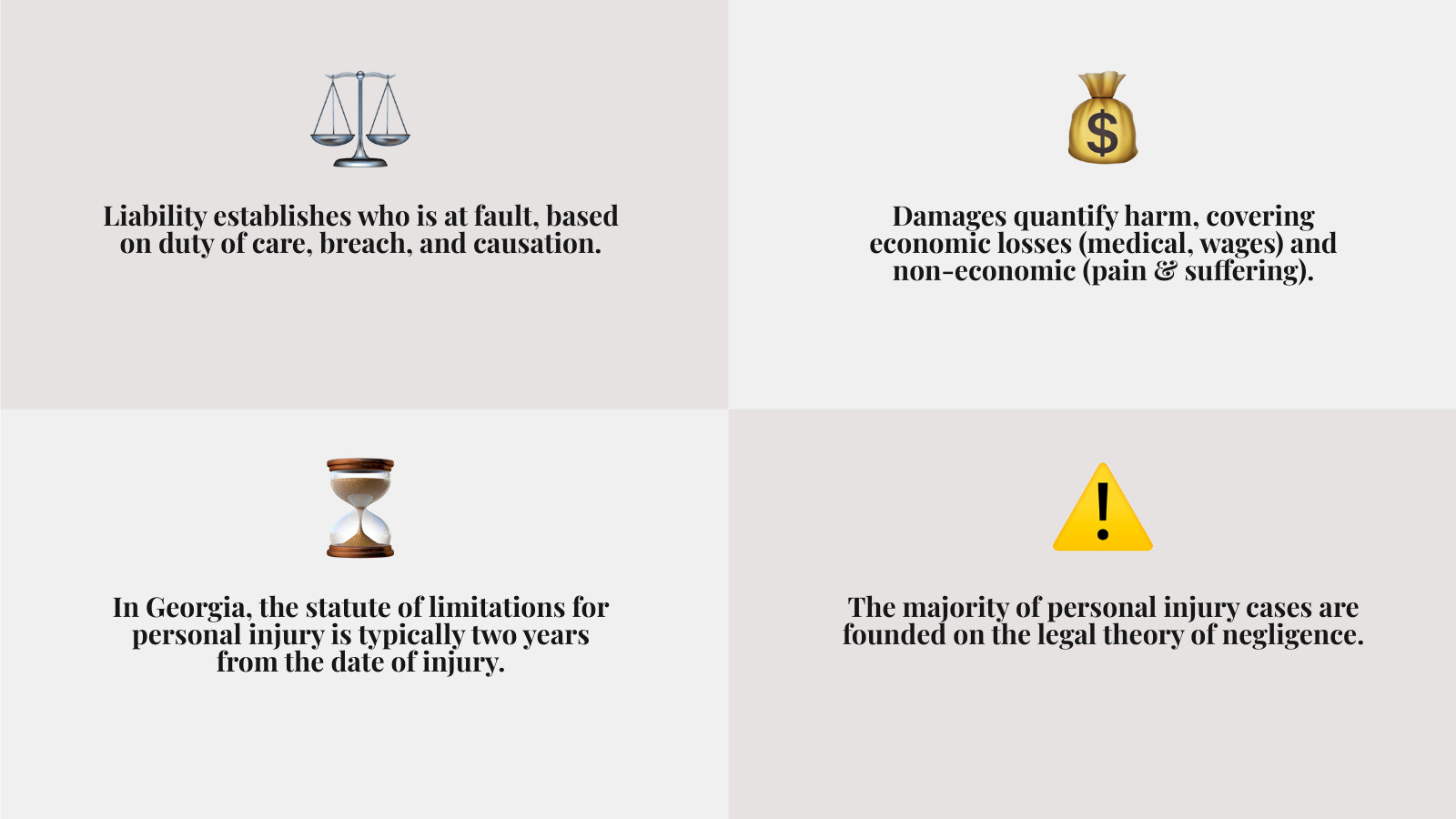
Every claim is built on two core issues: liability (who is at fault) and damages (the extent of the harm). The legal basis for a claim typically falls into one of three categories.
- Negligence: This is the most common basis. It occurs when a party fails to exercise reasonable care, and that failure results in injury. A distracted driver, a property owner who ignores a hazard, or a doctor who deviates from the standard of care can all be found negligent.
- Intentional Acts: These are situations where an individual deliberately causes harm, such as assault or battery. A victim can pursue a civil claim for damages even if criminal charges are also filed.
- Strict Liability: This applies in specific circumstances, most often in defective product cases. If a product with a design or manufacturing flaw causes injury, the manufacturer can be held liable regardless of their intent or negligence. Understanding Torts is fundamental to these concepts.
The path to accountability is not simple. Insurance companies and corporate defendants have vast resources to minimize payouts. They exploit rules and delay tactics, counting on the fact that most victims have never been through this process. This is why relentless legal representation is critical.
Types of Personal Injury Cases We Handle
At Cheeley Law Group, we pursue justice for victims of catastrophic injuries across Georgia, taking on the toughest cases. We represent individuals and families impacted by:
- Truck Wrecks: Collisions with commercial trucks often cause severe injuries. We investigate every detail, from driver fatigue to maintenance records, to hold trucking companies accountable.
- Car Accidents: Negligent drivers can cause life-altering injuries. We fight to secure compensation for medical bills, lost wages, and profound suffering.
- Wrongful Death: When negligence claims a life, we stand with grieving families to seek justice and compensation for their immeasurable loss.
- Defective Products: When a faulty product leads to injury, we challenge corporations to accept responsibility for the harm they inflict.
- Premises Liability: Property owners must maintain safe environments. When hazardous conditions cause injuries, we hold them accountable.
- Slip and Fall Accidents: These incidents can cause severe harm, including brain or spinal cord damage, when property owners fail to address dangerous conditions.
- Medical Malpractice: When a healthcare provider acts negligently—through misdiagnosis, surgical error, or improper treatment—and causes injury, we pursue justice for the victim.
- Self-Driving Vehicle Accidents: Accidents involving autonomous vehicles introduce complex liability questions. We are at the forefront of navigating these intricate claims.
Establishing Accountability: The Principles of Negligence

Most personal injury cases are built on the legal theory of negligence. Proving negligence is not about showing malicious intent; it is about demonstrating that a party failed to act with reasonable care, and that failure resulted in devastating consequences. Successfully establishing negligence requires proving four distinct elements in court.
The Four Elements of a Negligence Claim
To successfully argue a negligence claim, a plaintiff must demonstrate four critical elements:
- Duty of Care: The defendant owed a legal duty to the plaintiff to act with reasonable care. This means that a reasonable person in the defendant’s position would have foreseen that their actions or inactions could cause harm to others. For example, all drivers on Georgia roads owe a duty of care to other drivers, pedestrians, and cyclists to operate their vehicles safely. Property owners owe a duty to maintain safe premises.
- Breach of Duty: The defendant failed to uphold that duty of care. Their actions or inactions fell below the standard of what a “reasonable person” would do in similar circumstances. A distracted driver, a surgeon’s carelessness, or a property owner failing to clear a known hazard are all examples of a breach.
- Causation: The defendant’s breach of duty was a direct and proximate cause of the plaintiff’s injuries. There must be a clear link between the negligent act and the harm suffered. This means the injury would not have occurred “but for” the defendant’s negligence, and the injury was a foreseeable result of that negligence.
- Demonstrable Damages: The plaintiff suffered actual, measurable harm or losses as a result of the injury. These damages can be physical, emotional, or financial. Without demonstrable damages, there is no basis for a personal injury claim.
Proving these four elements requires meticulous investigation and a deep understanding of Georgia law. For more detailed information on this foundational concept, refer to More on Negligence.
What is Personal Injury Law’s View on Shared Fault?
In the pursuit of justice, it is not uncommon for defendants or their insurance companies to attempt to shift blame to the injured party. This concept is addressed by laws surrounding shared fault, which can significantly impact the compensation an injured person receives. Georgia follows a rule known as “modified comparative negligence.”
Under modified comparative negligence, an injured party can still recover damages even if they were partially at fault for the accident, but their recovery will be reduced by their percentage of fault. For example, if a jury determines that a plaintiff suffered $100,000 in damages but was 20% at fault for the incident, their award would be reduced to $80,000.
However, there is a critical threshold. Georgia’s modified comparative negligence rule includes a “50% bar rule.” This means if the injured party is found to be 50% or more at fault, they are completely barred from recovering any damages from the other party. This rule underscores the necessity of having a tenacious legal team that can aggressively defend against attempts to unfairly apportion blame. The goal is to ensure that accountability is placed squarely where it belongs, maximizing the compensation for the victim.
Quantifying the Harm: Damages in a Personal Injury Case

The goal of awarding damages is to provide financial compensation for the full scope of a victim’s losses. This requires a thorough investigation into how an injury has impacted a person’s life, from medical bills to their future ability to work. Damages are categorized as pecuniary (economic) and non-pecuniary (non-economic).
Pecuniary Damages: The Tangible Economic Losses
Pecuniary damages are the quantifiable financial losses a victim incurs. While past expenses are documented, projecting future losses requires expert analysis.
Common types of pecuniary damages include:
- Medical Expenses (Past and Future): All costs for treating the injury, from emergency care and hospital stays to physical therapy, medication, and long-term care.
- Lost Wages: Compensation for income lost while unable to work, including salary, bonuses, and commissions.
- Loss of Future Earning Capacity: Compensation for projected financial loss if an injury permanently impairs a person’s ability to earn at their pre-injury level.
- Property Damage: The cost to repair or replace damaged property, such as a vehicle in a car accident.
- Rehabilitation and Retraining Costs: Expenses for specialized therapies, adaptive equipment, or vocational retraining for a new career.
Accurately calculating these damages is critical to ensuring a victim is made whole. How Compensation is Calculated involves a meticulous review of every financial impact.
Non-Pecuniary Damages: The Intangible Human Cost
Non-pecuniary damages address the intangible losses that profoundly impact a victim’s quality of life. Though harder to quantify, they represent the real human toll of an injury.
These damages aim to compensate for:
- Pain and Suffering: This includes the physical pain from the injury and the accompanying emotional distress, such as anxiety, fear, and mental anguish.
- Emotional Distress: Specific psychological impacts like post-traumatic stress disorder (PTSD), severe anxiety, and depression resulting from the trauma.
- Loss of Enjoyment of Life: An inability to participate in hobbies, recreational activities, or daily routines that once brought joy.
- Disfigurement and Scarring: Permanent physical alterations that cause profound emotional and psychological distress.
- Loss of Consortium: A spouse or family member’s loss of companionship, affection, and support due to a loved one’s severe injury or death.
These damages are vital to achieving the full goals of tort law, as they acknowledge the profound, non-financial losses a victim endures. As discussed in “Pain and Suffering, Noneconomic Damages, and the Goals of Tort Law”, these damages are vital to achieving the full goals of tort law.
The Path to Justice: Navigating the Legal Process
Securing justice is a deliberate process governed by strict rules and deadlines. From the moment an injury occurs, the clock starts ticking. Understanding the critical steps—and the tactics used by insurance companies to derail claims—is essential. The journey can lead to a negotiated settlement or a courtroom battle, and every decision must be strategic.
Immediate Steps After an Injury
The actions taken immediately after an injury can profoundly impact a future claim. These steps protect your health and preserve vital evidence.
- Seek Medical Attention: Your health is paramount. See a doctor immediately, even if injuries seem minor. Medical records provide irrefutable evidence linking your injuries to the incident.
- Preserve Evidence: If safe, document the scene with photos and videos. Gather contact information from any witnesses. Do not alter or dispose of anything relevant.
- Document Everything: Keep a detailed record of all medical appointments, expenses, and medications. A journal tracking your pain and the injury’s impact on your daily life can be powerful evidence.
- Report the Incident: Report car accidents to the police, workplace injuries to your employer, and slip and falls to the property owner. An official report creates an immediate record.
- Avoid Speaking to Insurance Adjusters Without Legal Counsel: Insurance companies aim to minimize payouts. Never give a recorded statement or sign documents without consulting an attorney. Anything you say can be used to devalue your claim.
The Timeline for Justice: What is the Statute of Limitations in Personal Injury Law?
Time is a critical factor. Every state has a strict deadline, or statute of limitations, to file a lawsuit. Missing this deadline means forfeiting your right to seek compensation.
In Georgia, the statute of limitations for most personal injury and wrongful death cases is two years from the date of the injury or death. While this may seem like a long time, building a strong case requires extensive investigation. There are limited exceptions, such as the “findy rule” (where the clock starts when the injury is finded) or for minors, but relying on these is risky. Prompt action is essential.
The Role of Insurance and Subrogation
Insurance plays a central, often complex, role. The claim is typically made against the at-fault party’s liability insurance. Your own Uninsured/Underinsured Motorist (UM/UIM) coverage is also vital if the at-fault driver has insufficient insurance.
Your health insurance will likely cover initial medical bills. However, if you receive a settlement, your insurer may seek reimbursement. This is called subrogation. If your health insurance, Medicare, or Medicaid pays for your treatment, they may have a right to be repaid from your settlement funds. Navigating these liens is a critical part of securing a client’s net recovery.
For more information, explore our comprehensive Practice Areas.
Resolution: Settlement vs. Trial
The goal is to secure just compensation, either through a settlement or a trial. Most cases are resolved through negotiation, where we present evidence of liability and damages to the insurer. If talks stall, a neutral mediator may help facilitate a resolution.
If a fair agreement cannot be reached, we file a lawsuit. At Cheeley Law Group, we operate with a “trial first” strategy, preparing every case from day one as if it will go to a jury. This aggressive approach signals to defendants that we are prepared to fight, often compelling them to offer more favorable settlements. A trial becomes necessary only when an insurer refuses to offer fair compensation for a victim’s losses. In those moments, we are ready to take the fight to the courtroom.
Why Legal Counsel is Non-Negotiable in High-Stakes Cases
When you are facing a powerful corporation or a massive insurance carrier, you are not on a level playing field. They have teams of lawyers dedicated to minimizing their liability and paying as little as possible. An experienced trial attorney is the equalizer, capable of uncovering the truth, building an ironclad case, and demonstrating to a jury exactly what was taken from you.
The Role of a Trial Lawyer
The journey through a personal injury claim, especially one involving catastrophic harm, is complex and adversarial. The role of a trial lawyer extends far beyond simple paperwork; it is about relentless advocacy and strategic battle.
- Investigating the Claim: A dedicated trial lawyer carefully investigates every aspect of the incident. This includes reviewing police reports, medical records, witness statements, and accident reconstruction data. They leave no stone unturned in establishing liability and identifying all responsible parties.
- Gathering Evidence: Building an ironclad case requires comprehensive evidence collection. This can involve securing surveillance footage, expert testimony, product specifications, and internal corporate documents that often reveal negligence.
- Retaining Experts: Catastrophic injury cases often demand specialized knowledge. Trial lawyers work with a network of experts, including medical professionals, economists, vocational rehabilitation specialists, and accident reconstructionists, to provide authoritative testimony and detailed analysis of the long-term impact of the injuries.
- Calculating Full Damages: An attorney ensures that all past, present, and future damages are accurately calculated. This includes not just immediate medical bills and lost wages, but also projected future medical care, loss of earning capacity, and the profound, intangible costs of pain, suffering, and loss of enjoyment of life.
- Negotiating from a Position of Strength: With a carefully built case and the unwavering resolve to go to trial, a trial lawyer negotiates with insurance companies and corporate defendants from a position of undeniable strength. This tenacity often forces them to the table with fair settlement offers.
- Taking the Case to Verdict: If fair compensation is not offered, a trial lawyer will not hesitate to take the case to a jury. They possess the courtroom experience and Southern grit to present the victim’s story compellingly, expose corporate negligence, and secure a just verdict.
The Financials of a Claim
Many injured individuals hesitate to seek legal help, fearing the prohibitive cost of litigation, especially when already burdened by medical bills and lost income. However, the legal system for personal injury claims is designed to remove this barrier through the contingency fee model.
- Contingency Fee Explained: With a contingency fee arrangement, you pay no upfront legal fees. The attorney’s payment is contingent upon winning your case, whether through a settlement or a trial verdict. If the case is not successful, you owe no attorney fees. This structure ensures that access to justice is not limited by financial means.
- No Upfront Costs: This model allows victims of catastrophic injuries to pursue their claims against powerful corporations and insurance giants without incurring immediate financial strain. The firm covers the costs of litigation—expert fees, court filings, investigations—and is reimbursed from the final settlement or verdict.
- Aligning Interests: The contingency fee structure perfectly aligns the interests of the client and the attorney. The attorney’s motivation is directly tied to maximizing the client’s recovery, as their fee is a percentage of the total compensation secured.
- Funding the Fight Against Corporate Defendants: This financial model is particularly vital in “David vs. Goliath” scenarios. It empowers individuals to take on well-funded corporate defendants and insurance companies, ensuring they have the resources to build a compelling case and fight for the accountability they deserve.
Your Path to Accountability Starts Here
Personal injury law exists to hold negligent parties accountable for the harm they cause. It is a tool for justice, ensuring that the financial and personal burdens of a catastrophic injury do not fall on the victim. While past results do not guarantee future outcomes, the relentless pursuit of the truth is the only way to secure a just result. The attorneys at Cheeley Law Group have built a reputation on taking on the toughest cases and winning. If you or a loved one has suffered a serious injury, do not wait. Take the first step.